
TL;DR: Getting a driver to wait during short stopovers is straightforward with the right booking type. Rideshare apps like Uber give drivers just 3 minutes at each stop, which is why they often leave. Taxis charge metered waiting but aren’t obligated to stay. The most reliable option is booking an hourly or “as-directed” chauffeur service, where waiting between stops is built into the rate. Communicate your expected stop durations at booking, not mid-ride, and choose hourly hire whenever you have two or more stops.
What Does “Getting a Driver to Wait During Short Stopovers” Actually Mean?
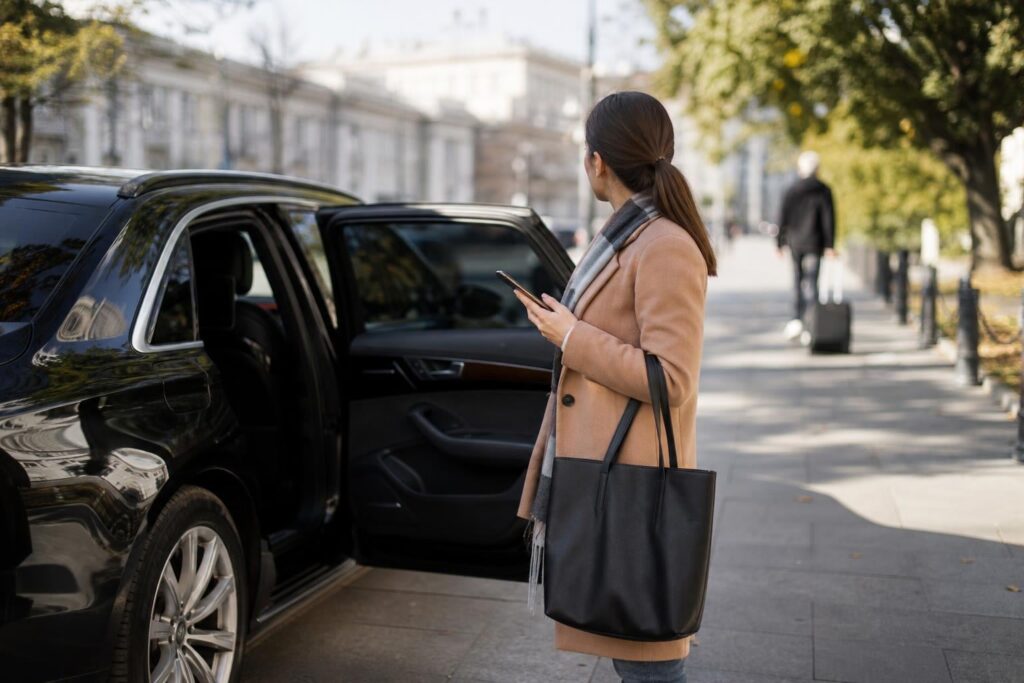
If you’ve ever stepped out of a car for a quick errand and returned to find your driver gone, you already understand the problem. Getting a driver to wait during short stopovers means arranging for your hired driver to stay put, engine off or idling, while you duck into a pharmacy, attend a 20-minute meeting, or collect something from an office. The driver remains available and the vehicle stays parked until you return to continue your journey.
The word “stopover” causes confusion because it means different things depending on context. In air travel, a stopover has a precise definition from IATA: a planned stay of more than 24 hours where the traveller exits the airport, clears customs, and arranges accommodation. A layover is shorter, typically 30 minutes to 24 hours for international trips.
In ground transport, “stopover” (or simply “stop”) is much more casual. It refers to a brief pause mid-journey, usually lasting 5 to 30 minutes. Think of it as the gap between leaving point A and arriving at point B where you need the car to pause at point C.
Common scenarios where passengers need their driver to wait:
- A corporate traveller stopping at a client’s office for a quick document signature between the airport and hotel
- A medical patient pausing at a pharmacy after a hospital appointment before heading home
- A tourist picking up tickets or supplies between sightseeing locations
- A wedding party stopping for photos at a park before continuing to the reception
The reason this question gets searched so often is that most people have been burned. They added a stop in their rideshare app, ran inside, and came back to an empty kerb. Understanding why that happens, and what alternatives exist, is the key to solving the problem.
If you’re planning a multi-stop day with executive transport and flexible scheduling, hourly chauffeur hire is purpose-built for exactly this situation.
Why Rideshare Drivers Often Won’t Wait
Uber and Lyft allow passengers to add multiple stops to a ride. But the apps instruct drivers to wait no more than 3 minutes at each stop. The app reminds passengers to keep stops to 3 minutes or less “as a courtesy to your driver.”
Three minutes is barely enough to walk into a shop and back. It certainly won’t cover a meeting, a medical consultation, or anything that requires you to sit down.
The real issue is economics. Practitioners on rideshare driver forums are blunt about this. On UberPeople.net, one driver explained: “Wait time doesn’t pay enough to make it worth it.” Another shared a personal rule: “I always agree to stop. And I always say ‘five minutes!’ as they’re exiting the car. That sets the expectation. If they’re not back in five minutes I generally cancel and go.”
The math makes their frustration understandable. Rideshare drivers earn per-kilometre and per-minute rates. Sitting stationary at a kerb pays a fraction of what driving a new fare would earn. One forum contributor put it plainly: “With Uber’s and Lyft’s garbage 1979 cab rates, you do not have time for stops.”
This creates an adversarial dynamic. Some drivers on forums report that passengers will leave a bag or purse in the car to prevent the driver from leaving. That’s not a transport solution. That’s a hostage negotiation.
The upfront price Uber quotes may also change when you add stops, update destinations, or take longer than expected, adding unpredictability for both sides.
Bottom line: rideshare is designed for fast, single-destination trips. It is the wrong tool when you need a driver to wait during short stopovers. For a deeper comparison, the differences between luxury transport and rideshare are worth understanding before your next multi-stop day.
Booking Types That Guarantee Your Driver Waits
Three booking structures exist in the professional transport industry. Only one truly guarantees your driver will be there when you walk back out.
Hourly or “As-Directed” Hire
This is the gold standard for getting a driver to wait during short stopovers. An as-directed booking reserves a chauffeur and vehicle for a block of hours that you control. You direct the route, the stops, and the timing. The vehicle waits with you between stops.
Unlike point-to-point transfers, hourly service allows you to make as many stops as needed, change plans on the fly, and travel without route restrictions. Whether it’s a corporate roadshow with four office visits, a wine tour with cellar door stops, or a wedding day with photo locations, the driver stays assigned for the entire booking window.
Most Australian chauffeur operators require a minimum of 2 to 3 hours for hourly bookings. Within that block, there are no extra charges for waiting. It is all included in the hourly rate.
Need flexibility for shifting meeting times or unplanned detours? Simply let your chauffeur know. No extra paperwork. No rebooking. The vehicle is yours for the duration.
Point-to-Point Transfer with Waiting-Time Add-On
A standard point-to-point transfer is priced by route: pickup address to drop-off address. The driver’s job ends at the destination. If you want a mid-route stop with waiting, you’ll typically encounter extra charges.
Most chauffeur services offer a complimentary waiting period at the initial pickup. For airport pickups, this is commonly 45 to 60 minutes after flight landing (to account for customs, baggage, and delays). For regular pickups at hotels or offices, the grace period is usually 15 minutes. After that, per-minute waiting charges apply.
This model works for a single short stop on an otherwise straightforward journey. If you have two or more stops, hourly hire is almost always the better option. You can learn more about what’s included in fixed-price transfers to decide which model fits your trip.
Fixed-Fare with Pre-Arranged Stops
Some operators offer fixed-fare bookings that include pre-agreed stops. You tell the company at booking time that you need a 15-minute stop at a specific address midway through your journey. They factor the waiting into the quoted price. This gives cost certainty but less flexibility than hourly hire, since adding unplanned stops mid-ride may incur extra charges.
How Waiting Time Is Typically Charged in Australia
Understanding the cost structure helps you choose the right booking type and avoid surprises.
Complimentary Grace Periods
Airport pickups usually include 45 to 60 minutes of free waiting time after the flight lands. This accounts for immigration queues, baggage collection, and the walk to the meeting point. Services that use real-time flight tracking adjust the pickup window automatically if a flight is delayed.
Standard (non-airport) pickups typically include 15 minutes of complimentary waiting. After that, the clock starts.
Per-Minute Billing
Once the grace period ends, most operators charge by the minute. Rates vary by company and city. As a reference point, some Australian operators charge around AUD $1.50 to $2.50 per minute of waiting time beyond the free window.
Hourly All-Inclusive Model
Hourly chauffeur rates in Australia generally fall in these ranges:
| Vehicle Type | Typical Hourly Rate (AUD) |
|---|---|
| Premium sedan | $90 to $150 per hour |
| Luxury sedan (e.g., Mercedes S-Class) | $76 to $153 per hour |
| SUV or luxury van | $115 to $229 per hour |
Minimums of 2 to 3 hours are standard. All waiting between stops is included in the hourly rate with no per-minute surcharges.
For a more detailed breakdown of pricing across Australian cities, the chauffeur service cost guide covers rates by vehicle type and region.
Rideshare Waiting Costs
Uber and Lyft charge per-minute wait fees after the 3-minute stop window. The exact rate depends on the city and time of day, but the bigger risk isn’t cost. It’s the driver leaving entirely.
Practical Tips to Ensure Your Driver Waits
Knowing the right booking type is half the battle. Execution matters too. These tips apply whether you’re booking a chauffeur, negotiating with a taxi, or trying to make rideshare work for a quick stop.
1. Communicate Stop Durations at Booking, Not Mid-Ride
The single most effective thing you can do is tell the operator exactly what you need before the trip starts. “I’ll need the car to wait approximately 20 minutes at 123 Collins Street while I attend a meeting, then continue to Melbourne Airport.” This lets the company assign the right booking type, price it correctly, and brief the driver. Mid-ride surprises create problems.
2. Choose Hourly Hire for Two or More Stops
If your day involves more than one stop, hourly hire is almost always cheaper and more reliable than booking multiple point-to-point transfers. You avoid rebooking fees, eliminate the risk of your next driver being late, and keep the same chauffeur who already knows your preferences.
3. Provide a Rough Itinerary in Advance
Even for as-directed bookings, sharing an approximate schedule helps. Your chauffeur can plan routes, identify parking options near each stop, and account for traffic between locations. This is especially valuable for ensuring on-time arrival at time-sensitive appointments.
4. Keep the Chauffeur’s Direct Number Handy
Professional chauffeur services typically share the driver’s contact details before pickup. If your stop runs long or finishes early, a quick text lets the driver reposition the vehicle or adjust plans in real time. This two-way communication is one of the biggest differences between chauffeur service and rideshare.
5. Consider Tipping for Extended Waits
Industry etiquette guides note that stopovers require flexibility and adaptability from the driver, potentially extending the overall trip duration. The added time and effort involved warrant consideration when calculating gratuity. A tip isn’t mandatory, but it acknowledges that the driver is working during the wait, not sitting idle.
What Chauffeurs Actually Do While Waiting
Passengers sometimes assume a waiting chauffeur is simply scrolling their phone. The reality is different. Even when stationary, professional chauffeurs work to ensure safety, punctuality, and precision. That includes route planning for the next leg, monitoring traffic and flight updates, keeping the vehicle clean and climate-controlled, refuelling if needed, and replacing onboard amenities like water or phone chargers.
This ongoing attentiveness is why waiting time is a billable service. The chauffeur is at your disposal for the entire window, actively preparing for whatever comes next. It’s also why the skills of a professional chauffeur go well beyond driving ability.
Stopover Waiting: Rideshare vs. Taxi vs. Chauffeur Service
This comparison covers the three main options for getting a driver to wait during short stopovers.
| Factor | Rideshare (Uber/Lyft) | Taxi | Professional Chauffeur |
|---|---|---|---|
| Maximum wait time | 3 minutes per stop (app-enforced) | No formal limit, but driver may leave | Unlimited within booking window |
| Cost model | Per-minute after 3 min; upfront price may change | Metered waiting rate | Included in hourly rate, or per-minute after grace period |
| Driver obligation to stay | None. Driver can cancel at any time | None. Driver can leave at any time | Contractual. Driver is assigned for the booking duration |
| Multiple stops | Up to 3 stops per trip (Uber) | Must negotiate each stop individually | Unlimited stops within hourly booking |
| Communication | In-app messaging only | Direct, in person | Phone, text, WhatsApp before and during trip |
| Best use case | Single destination, no stops | One very short stop (under 5 min) | Multi-stop days, meetings, events, medical appointments |
| Reliability for waiting | Low | Medium | High |
The pattern is clear. As the number of stops increases and the wait times grow, professional chauffeur service becomes not just more convenient but more cost-effective.
When Hourly Hire Makes More Sense Than Multiple Transfers
Consider a corporate traveller visiting three client offices across Sydney in one afternoon. Each meeting lasts 30 to 45 minutes. Here are the two approaches:
Option A: Three separate point-to-point transfers. Book a car from the hotel to office 1. Book another from office 1 to office 2. Book a third from office 2 to office 3. Each booking has its own base fare, and there’s no guarantee the next driver arrives on time. If a meeting runs late, the second booking may need to be cancelled and rebooked (possibly at a higher rate). Total: three base fares plus rebooking risk.
Option B: Four-hour as-directed booking. One chauffeur, one vehicle, for the afternoon. The car waits at each office. If a meeting runs 10 minutes over, no problem. No rebooking, no surge pricing, no coordination stress. Total: one hourly rate times four hours.
For anyone managing transport logistics for corporate roadshows, the hourly model eliminates the biggest variable: timing uncertainty.
The same logic applies to wedding days (ceremony to photos to reception), medical appointment rounds, and tourist itineraries with multiple sightseeing stops. Once you pass two stops in a single day, hourly hire almost always wins on both cost and convenience.
Getting a Driver to Wait for Stopovers: A Summary
The frustration behind this search query is real. Rideshare economics actively discourage waiting. Taxis offer no contractual guarantee. The only transport model built specifically for getting a driver to wait during short stopovers is professional chauffeur service, particularly the hourly or as-directed booking format.
The fix is simple: match the booking type to the trip type. Single destination with no stops? A standard transfer works. One quick stop under 15 minutes? A point-to-point with waiting-time add-on is fine. Two or more stops, or any stop longer than 15 minutes? Book hourly.
If you have a multi-stop day coming up, get in touch to discuss your itinerary and find out which booking format gives you the best combination of flexibility and value.
Frequently Asked Questions
How long will an Uber driver wait at a stop?
Uber’s app instructs drivers to wait a maximum of 3 minutes at each added stop. After that, the driver can choose to end the trip. Many drivers on forums report leaving after 5 minutes. There is no obligation for a rideshare driver to stay.
What is “as-directed” chauffeur service?
As-directed (also called hourly hire) means you reserve a chauffeur and vehicle for a set number of hours. You control the route and stops. The driver waits between appointments, and all waiting time is included in the hourly rate. Most operators require a 2 to 3 hour minimum booking.
How much does waiting time cost with a chauffeur in Australia?
For hourly bookings, waiting is included in rates that typically range from AUD $90 to $229 per hour depending on the vehicle. For point-to-point bookings, most services include 15 minutes of free waiting (or 45 to 60 minutes for airport pickups), then charge approximately AUD $1.50 to $2.50 per minute afterward.
Can I add stops to a fixed-price airport transfer?
Some operators allow you to add pre-arranged stops to a fixed-price booking for an additional fee. Others will suggest switching to an hourly booking if you need flexibility. It’s best to mention any required stops when you first book so the operator can quote the right format. See how fixed-price transfers work for more detail.
Will a taxi wait while I run an errand?
A taxi will charge metered waiting time, so the driver is being paid while stationary. However, there’s no contractual obligation for the driver to remain. In busy areas where fares are easy to find, a taxi driver may decide to leave rather than wait, especially for stops longer than 10 minutes.
Should I tip a chauffeur who waits for me?
Tipping is not mandatory, but it’s appreciated, especially for extended waits. The chauffeur is actively working during the waiting period (route planning, vehicle upkeep, monitoring your schedule), not simply sitting idle. If a driver has been flexible and accommodating through multiple stops, a gratuity recognises that effort.
What’s the difference between a stopover and a layover in ground transport?
In ground transport, the terms are used loosely and often interchangeably. Both refer to a pause mid-journey. In air travel, the distinction is formal: a layover is under 24 hours, while a stopover exceeds 24 hours. For chauffeur bookings, any mid-route pause where the driver waits is simply called a “stop” or “waiting time.”
How many stops can I add to an hourly chauffeur booking?
With an hourly or as-directed booking, there is no set limit on stops. You can visit as many locations as your time block allows. The chauffeur adjusts to your itinerary in real time, which makes this format ideal for busy days with unpredictable schedules.