
TL;DR
If your taxi or rideshare just cancelled on you, don’t rebook on the same app immediately. Open a competing rideshare app, check wait times, and simultaneously call a local taxi company. The cancellation likely reflects a systemic issue (driver shortage, surge pricing, shift timing) that won’t resolve by hitting “request” again. For time-critical travel like airport runs or events, pre-booked chauffeur services with confirmed driver allocation are the structural fix.
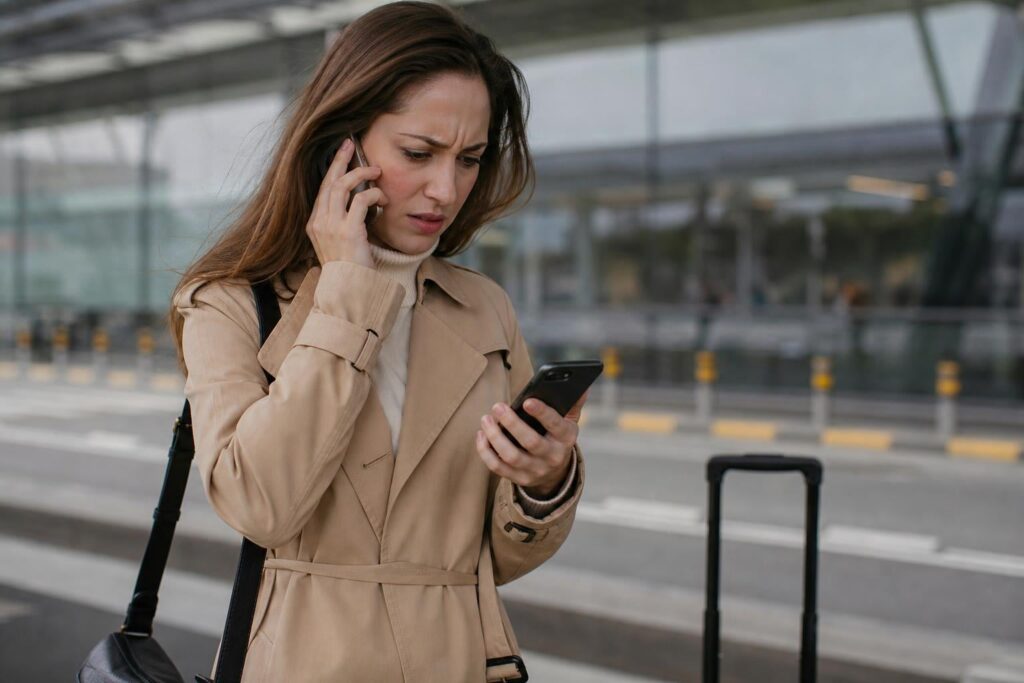
It’s 4:30am. Your flight leaves at 6. You open the app and the driver cancels. Then the next one cancels. Then surge pricing kicks in. This is not a rare occurrence. Product management case studies reference an industry cancellation rate benchmark of roughly 25%, meaning one in four booked rideshare trips gets cancelled. If you’re reading this mid-crisis, skip straight to the immediate action protocol below. If you’re planning ahead, keep reading for the full picture.
This glossary covers every term and concept that matters when a taxi, Uber, or rideshare cancels at the worst possible moment, along with your rights under Australian law and how to prevent it from happening again.
If you already know you need guaranteed transport for an upcoming airport run or event, pre-booked airport transfers with confirmed driver allocation eliminate cancellation risk entirely.
Last-Minute Taxi Cancellation: What It Means and Why It Happens
Last-minute taxi cancellation refers to any ride cancellation that occurs within approximately 30 minutes of your scheduled pickup, or after a driver has already been assigned. It includes driver-initiated cancellations (the driver drops your trip), system cancellations (no driver found), and effective no-shows (the driver simply never arrives).
The Gig Economy Structural Problem
The root cause is straightforward: a rideshare driver is an independent contractor with no contractual obligation to complete your trip. They can cancel at any point before pickup with minimal consequences. On driver forums like UberPeople.net, some drivers openly report personal cancellation rates between 10% and 40%. One driver stated plainly: “As my 8% acceptance rate shows, I will never take an unprofitable trip.”
This isn’t laziness or malice. It’s rational behaviour within a system that treats drivers as independent operators who can accept or reject work freely.
The most common reasons drivers cancel include:
- A better fare appeared. Another platform offered a more profitable trip. As one driver put it on a forum: “The only reason I usually cancel is if I get a better offer on another platform.”
- Surge avoidance or chasing. The driver doesn’t want to drive into a non-surge area, or they’re repositioning to where surge pricing is active.
- Shift timing. They’re nearing the end of their driving hours and your trip takes them too far from home.
- Airport-specific reasons. Ex-Uber drivers on Team Blind cite issues like unfair commission on airport tolls, the inability to convert to cash trips, and being sent in the wrong direction after pickup.
For corporate visitors who depend on reliable ground transport, this structural problem is especially damaging. Understanding why taxi service is unreliable for business travel helps frame the right backup strategy.
The Human Cost
The statistics are abstract. The impact is not. Trustpilot reviews from affected travellers paint a consistent picture. One reviewer described how a cancellation “caused significant distress and disrupted my travel plans. I had to scramble to find an alternative transport option, which not only added to my stress but also resulted in delays that almost made me miss my flight.”
Another traveller was told their booking was a customer no-show (when in reality the driver never appeared) and received no refund. The entire exchange was handled through automated emails with no human contact.
Early morning airport transfers are the worst-case scenario. On an Anand Tech forum, a user described trying multiple services for a 5am pickup: “Tried a more expensive option with a ton of positive reviews. Well they no-showed at 5am. No one answered the phone when we called either.”
Immediate Response Protocol: What to Do Right Now
Immediate response protocol is a sequence of actions designed to get you moving again as fast as possible after a ride cancellation. The goal is speed, not perfection.
Step 1: Do Not Rebook on the Same App
This is counterintuitive but important. The cancellation often signals a localised problem, such as driver shortage, surge pricing, or low demand in your area, that won’t resolve by tapping “request ride” again. Repeated rebooking attempts waste time and increase frustration.
Step 2: Cross-Check Competing Apps
Open one or two alternative ride-hailing apps simultaneously. In Australia, roughly 93% of rideshare users have Uber, but DiDi and Ola also operate in major cities. Compare estimated wait times and prices across apps. One platform’s dead zone may be another’s sweet spot.
Read more about managing surge pricing across different apps during peak periods.
Step 3: Call a Local Taxi Company or Head to a Taxi Rank
Traditional taxi companies operate on different dispatch methods and often have dedicated drivers who don’t use rideshare platforms. They may be more available precisely when app-based drivers are scarce. If you’re near an airport, train station, or hotel, there’s likely a taxi rank within walking distance.
Situational Guidance
At home (early morning): You have the most options. Call a taxi company, try multiple apps, or ask a friend or family member as a last resort. If you’ve pre-saved a local taxi company’s number (which you should), this takes 60 seconds.
At an airport: Head to the official taxi rank. Every major Australian airport (Sydney, Melbourne, Brisbane, Perth, Adelaide) has designated taxi pickup areas. Airport shuttle services may also be available. Don’t wait outside arrivals refreshing an app.
At a venue, hotel, or restaurant: Ask staff. Hotels almost always have relationships with local taxi companies or car services. Restaurants in busy areas are usually near taxi ranks.
Mistakes to Avoid
- Accepting rides from unlicensed drivers who approach you in person
- Waiting more than 10 minutes for a second cancelled ride on the same app
- Panic-rebooking during a surge without checking the multiplier
- Forgetting to screenshot your cancellation notification (you’ll need it for disputes)
If your driver goes silent before the cancellation, that’s a warning sign. Here’s guidance on what to do when your driver stops communicating.
Cancellation Fee: What You Owe and What You’re Owed
Cancellation fee is a charge applied to either the passenger or the driver when a trip is cancelled after a certain window. A closely related concept is the no-show fee, charged when a passenger fails to appear at the pickup location within a set waiting period.
Uber’s Cancellation Windows in Australia
Uber’s fee structure varies by service tier. For UberX, passengers generally have a short free cancellation window (approximately 2 minutes after a driver is assigned). If you cancel after that, a fee applies. For Uber Reserve (scheduled rides), free cancellation is available up to 60 minutes before the scheduled pickup.
Wait times before a driver can mark you as a no-show also vary: approximately 2 minutes for Share, 7 minutes for UberX, 10 minutes for Comfort, and 15 minutes for Black.
The A$26 Million Uber Fine
Australian consumers should know this: between December 2017 and September 2021, Uber displayed a misleading cancellation warning to riders. The message said words to the effect of “You may be charged a small fee since your driver is already on their way,” even when consumers were cancelling within the free cancellation window. Over two million Australian consumers were shown this misleading warning. Uber agreed to pay an A$26 million fine to the ACCC for this conduct.
The takeaway: just because an app says you’ll be charged doesn’t mean the charge is legitimate.
Your Rights Under Australian Consumer Law
Under Australian Consumer Law, travel services carry automatic guarantees. The consumer guarantee that services are provided within a reasonable time is especially relevant. When a transport service is cancelled or the provider no-shows, that guarantee may not have been met.
If a business sells a service that doesn’t meet consumer guarantees, it must offer a solution: a repair, replacement, or refund.
How to Dispute an Unfair Fee
- Document everything. Screenshot the cancellation notification, the timestamp, and any communications.
- Contact the provider. Use the app’s in-app support, email, or phone. State what happened clearly and request a refund.
- Escalate to Fair Trading. If unresolved, contact your state’s Fair Trading agency (Fair Trading NSW, Consumer Affairs Victoria, Office of Fair Trading QLD, etc.).
- Go to the tribunal. For higher-value disputes, you can lodge a claim with your state’s civil and administrative tribunal: NCAT in NSW, VCAT in Victoria, or QCAT in Queensland. These are low-cost and don’t require a lawyer.
For transparency on how cancellation policies should work with a professional service, see our service terms and conditions.
Surge Pricing: Why It Triggers Cancellations in Both Directions
Surge pricing (also called dynamic pricing) is the practice of raising fares during periods of high demand or low driver supply. It’s the mechanism that makes your $25 airport run suddenly cost $75 at 6am on a Monday.
Surge pricing causes cancellations from both sides. Riders cancel because the fare is too high. Drivers cancel trips headed away from surge zones because they’d rather stay where the money is. A driver sitting in a surge zone with a 2.5x multiplier has no financial incentive to accept your 1.0x trip across town.
This creates a vicious cycle. Fewer drivers accepting normal-fare trips leads to more cancellations, which pushes more riders into surge pricing, which causes more riders to cancel, which concentrates remaining drivers in high-surge areas.
The alternative is fixed pricing. Pre-booked transport services quote a price at the time of booking, and that price doesn’t change regardless of demand, weather, or time of day. No surge. No weather premium. No “high demand” multiplier.
Pre-Booked Transfer vs On-Demand Ride: The Critical Distinction
Pre-booked transfer means a vehicle and driver are confirmed and allocated to your booking in advance. The driver knows your pickup time, location, and destination before the day of travel.
On-demand rideshare means your trip request is broadcast to nearby drivers at the moment you need the ride. A driver may or may not accept. Even if one accepts, they may still cancel.
This distinction matters enormously. With on-demand rideshare, availability depends on drivers being nearby and willing to accept the trip at the exact time you need them. Even where an app allows advance scheduling, it’s often a request for a future ride rather than a confirmed driver and vehicle allocation.
The Uber Reserve Caveat
Many people assume that scheduling an Uber in advance solves the cancellation problem. It doesn’t, at least not entirely. Uber’s own documentation states: “Your reservation is not confirmed until you have received your trip details. Your driver is however free to cancel your request for a trip. In this case, the trip request will be assigned to another nearby driver. Please note that Uber cannot guarantee that a driver will accept your request for a ride.”
Practitioners on Team Blind captured the anxiety this creates: “I have an early morning flight and tried scheduling Uber. It said it will notify me at end of the pick up window if it can’t find an available car, which means I could be stuck.”
A commenter offered perhaps the sharpest perspective: “If the upside is saving $50 across 3 people and the downside is potentially missing your flight, why don’t you use a pro?”
Pre-booked chauffeur services exist specifically to close this gap. The driver is assigned in advance, the price is fixed, and the booking is confirmed rather than requested. For time-critical trips, this structural difference is everything.
Flight Monitoring: The Feature That Prevents Airport Pickup Failures
Flight monitoring (or real-time flight tracking) is a service where your transport provider tracks your flight’s actual arrival time and adjusts the pickup accordingly.
This matters because flights are late constantly. Without flight monitoring, a driver booked for a 7pm arrival might leave or mark you as a no-show when your delayed flight doesn’t land until 7:40pm. With flight monitoring, the driver knows your flight is late before you even land and adjusts their arrival time to match.
This feature is standard with professional chauffeur services but generally unavailable through rideshare apps, where the driver is only matched to your trip moments before pickup.
If you’ve ever struggled to find your driver after landing, navigating international arrivals meeting points is another common pain point worth understanding.
Meet-and-Greet Pickup: Why It Matters More Than You Think
Meet-and-greet pickup means a named driver waits for you at a designated meeting point, often holding signage with your name. The driver’s contact details are shared before pickup so you can communicate directly.
Contrast this with a standard rideshare experience: you don’t know who your driver is until they’re assigned (which might be minutes before pickup, or not at all). If they cancel, you start over with a stranger. There’s no pre-shared contact, no signage, and no accountability for being at the right spot.
Meet-and-greet is especially important for international arrivals (who may not have local phone service), elderly travellers, VIPs, large groups, and anyone arriving at a busy terminal. For groups with staggered arrivals, coordinating pickups for multiple passengers requires this level of advance planning.
No-Show: What It Means from Both Sides
No-show has two meanings depending on who fails to appear. A passenger no-show occurs when the rider doesn’t arrive at the pickup within the allowed waiting window. A driver no-show occurs when the driver never arrives at all, often without cancelling the trip in the app.
Driver no-shows are particularly frustrating because the passenger may not receive an official cancellation notification. Instead, they’re left waiting, watching a car icon that never moves on a map, until eventually the trip is silently dropped.
What to Do If Your Driver No-Shows
- Screenshot the app showing the assigned driver, pickup time, and any lack of movement.
- Cancel the trip yourself if the driver hasn’t after the waiting window expires.
- Request a refund through the app, citing the driver’s failure to arrive.
- If the app denies your refund, escalate using the dispute process outlined above (Fair Trading, then your state tribunal).
- Book an alternative immediately using the cross-platform strategy from the immediate response protocol.
If you’re worried about this happening before an important commitment, here’s a deeper guide on what to do if a driver is late to a meeting or appointment.
Prevention Checklist: How to Avoid Last-Minute Cancellations
Knowing what to do when a taxi is cancelled last minute is important. Preventing it from happening in the first place is better. Here’s a ranked prevention strategy, ordered from most reliable to least.
For Time-Critical Travel (Flights, Meetings, Events)
- Book a confirmed chauffeur service in advance. Ideally at the time you book your flight or event. A confirmed booking with a pre-assigned driver is fundamentally different from an on-demand ride request.
- Confirm the booking twice. Once 24 hours before and once on the day. Professional services expect and welcome confirmation calls.
- Save the driver’s contact details offline. Screenshot the driver’s name and phone number. If your phone battery dies or data drops out, you can still reach them from any phone.
- Know your backup. Have a second app installed with your payment details already entered. Save a local taxi company’s phone number in your contacts. Know where the nearest taxi rank is.
For Casual or Flexible Travel
- Have two rideshare apps ready. Don’t rely on a single platform.
- Avoid peak cancellation windows. The highest cancellation rates occur during early morning hours (4am to 6am), late-night bar close (1am to 3am), and during major events or bad weather.
- Tip well on your first ride if you use the same regular driver. Some platforms allow favouriting drivers. A driver who knows you tip is less likely to cancel.
For Weddings, Formals, and Special Events
- Book specialist event transport with a contract. Rideshare is built for casual convenience. It was never designed for a bride’s arrival or a school formal pickup where timing is non-negotiable.
- Confirm the vehicle and chauffeur details in writing. Get the vehicle type, registration, driver name, and contact in advance.
- Build buffer time into the schedule. Even with confirmed transport, leave 15 to 30 minutes of buffer for traffic or minor delays.
For couples planning ahead, dedicated wedding transport with contract guarantees removes the uncertainty entirely.
When to Use a Chauffeur Service Instead of Rideshare
Every business traveller, every wedding planner, and every parent organising a school formal has a version of the same story. The Uber is booked the night before. The 4am alarm goes off. The app is opened. The driver is assigned. Then the driver cancels. Then the next driver cancels. Then the price climbs because surge pricing has activated in the suburb. By the time a car finally arrives, the executive is already running late for a 6am flight.
This is not an edge case. It’s a structural feature of on-demand platforms.
A pre-booked chauffeur service operates on a different model entirely. The booking is confirmed. The driver is assigned in advance. The price is fixed at the time of booking. For airport pickups, flight monitoring adjusts the arrival time automatically. A meet-and-greet with pre-shared contact details means you always know exactly who is picking you up and how to reach them.
The question isn’t whether chauffeur services are “worth it.” The question is whether the event you’re travelling to is worth the risk of a last-minute cancellation. For a casual dinner, rideshare is perfectly fine. For a 6am flight, a client meeting, a wedding, or any commitment where being late isn’t an option, the structural reliability of a confirmed booking is what matters.
Get a quote for your next transfer and remove the uncertainty before it starts.
Frequently Asked Questions
Can I get a refund if my Uber or rideshare driver cancels on me?
Yes, in most cases. If the driver cancels, you should not be charged a cancellation fee. If a fee is incorrectly applied, dispute it through the app’s support system. Under Australian Consumer Law, services must be provided within a reasonable time, and a cancellation may constitute a failure to meet this guarantee. If the provider won’t refund you, escalate to your state’s Fair Trading agency.
Why do rideshare drivers cancel so often?
Drivers are independent contractors with no obligation to complete any trip. Common reasons include receiving a more profitable fare on another platform, avoiding long trips that take them far from home, surge pricing dynamics, and reaching the end of their shift. Driver forums indicate that some drivers maintain cancellation rates of 10% to 40% with minimal platform consequences.
Does scheduling an Uber in advance prevent cancellations?
Not entirely. Uber Reserve allows you to schedule rides ahead of time, but Uber’s own terms state that they “cannot guarantee that a driver will accept your request for a ride.” Your reservation isn’t confirmed until a driver actually accepts, and even then the driver can still cancel. For time-critical travel, a pre-booked chauffeur service with a confirmed driver allocation is more reliable.
What should I do if my airport transfer cancels at 4am?
Don’t rebook on the same app. Open a competing rideshare app and check availability. Simultaneously call a local taxi company. If you have time, check whether your hotel or accommodation has a shuttle or car service. For future early morning transfers, pre-book with a service that confirms the driver in advance and offers flight monitoring.
Was Uber really fined for misleading Australians about cancellation fees?
Yes. Between 2017 and 2021, Uber displayed warnings suggesting passengers would be charged for cancelling, even when they were within the free cancellation window. Over two million Australian consumers saw these misleading messages. The ACCC took action and Uber agreed to pay an A$26 million fine.
What’s the difference between a pre-booked transfer and an on-demand rideshare?
A pre-booked transfer involves a confirmed vehicle and driver allocated to your booking in advance. An on-demand rideshare broadcasts your trip request to nearby drivers at the moment you need it, with no guarantee anyone will accept. Even Uber’s scheduling feature operates more like a future request than a confirmed allocation.
Where can I complain about a taxi or rideshare company in Australia?
Start with the provider’s own complaint process. If that fails, contact your state Fair Trading agency. For disputes involving money (refunds, overcharges), you can lodge a claim with your state’s civil and administrative tribunal: NCAT in New South Wales, VCAT in Victoria, or QCAT in Queensland. These tribunals are low-cost and don’t require legal representation.
How can I make sure my wedding transport doesn’t cancel last minute?
Book a specialist event transport provider with a written contract that specifies the vehicle, driver, pickup time, and cancellation terms. Confirm details in writing 24 hours before and again on the morning of the event. Avoid relying on rideshare apps for wedding transport, as there is no contractual commitment and cancellations can happen without notice or recourse.