
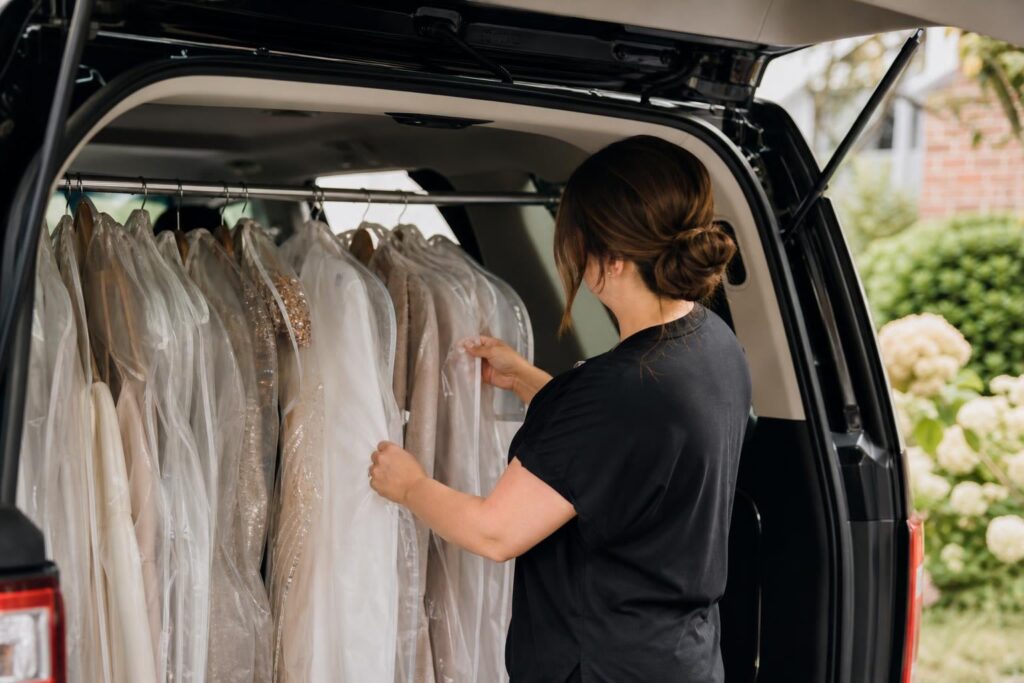
TL;DR: Transporting a bridal party with gowns without creasing requires the right combination of garment preparation, vehicle choice, and in-transit care. Use breathable garment bags with acid-free tissue paper layered between folds, choose a vehicle with 20-30% more capacity than your headcount, keep the cabin cool, and bring a portable steamer to the venue as a safety net. The challenge multiplies when you’re moving four to eight women in formal gowns simultaneously, not just one bride.
Most wedding transport guides focus on a single bride and her dress. That misses the real problem. On the morning of a wedding, you’re often trying to move a bride, four to seven bridesmaids, and possibly a mother of the bride, all wearing formal gowns, into vehicles that need to get everyone to the venue looking pristine. That’s a group logistics problem, and it demands a different approach than simply draping one dress across a back seat.
This guide covers everything from fabric science to vehicle selection to a shareable checklist your bridal party can follow on the day.
Explore wedding transport options to see how the right vehicle makes all the difference.
Why Gowns Crease in Transit (and Why It’s Worse with a Group)
Creasing happens when fabric is compressed under its own weight, trapped against another surface, or exposed to heat and humidity for an extended period. Three factors working together, compression plus heat plus time, determine how badly a gown wrinkles.
Now multiply that by six or eight women sitting side by side in formal wear.
A garment bag (a protective cover, ideally made from breathable fabric rather than sealed plastic, used to shield a gown during transport) can protect against surface contact. But when multiple gowns are packed into a cramped cabin, the real enemy is body-to-body compression. Skirts press against neighbouring skirts. Someone’s bouquet ends up on someone else’s lap. A heavy beaded bodice (the structured upper portion of a gown, often boned or corseted) presses into the seat. These problems don’t exist when you’re planning for one dress. They become unavoidable when you’re planning for a group.
Bridal alteration professionals report that most creasing happens after collection from the dressmaker, not during alterations. The most common causes: folding a long train into a standard garment bag, compressing a skirt inside a car boot, and placing luggage or shopping bags against the dress. With a bridal party, these mistakes get repeated across every gown.
Know Your Fabrics: A Wrinkle-Risk Quick Reference
Different fabrics behave very differently in transit, and this is the single biggest variable that determines whether your gowns arrive crease-free. Practitioners on The Knot forums confirm this from experience: one user reported her chiffon dress wrinkled noticeably just sitting in a garment bag during a short drive, while another said her lace gown survived a 30-minute limo ride without a single crease.
Here’s a quick-reference table for the most common bridal fabrics:
| Fabric | Wrinkle Risk | Recovery Ease | Transport Tip |
|---|---|---|---|
| Satin | High | Slow, needs careful steaming | Keep flat, never fold sharply, layer with tissue |
| Silk | High | Moderate, but heat-sensitive | Avoid warm cabins, steam at distance only |
| Chiffon | Medium-High | Fast, wrinkles drop out quickly | Wrinkles easily but recovers well with hanging |
| Tulle | Low | Very fast, fluffs back into shape | Watch for snagging, not creasing |
| Crepe | Low | Excellent, natural elasticity prevents permanent creases | One of the most travel-friendly bridal fabrics |
| Organza | Low | Good | Great for summer and destination weddings |
| Lace | Low | Good | Minimal creasing risk, focus on snag prevention |
Crepe deserves special mention. It’s a textured, wrinkle-resistant fabric with natural stretch that makes it one of the best choices for gowns that need to travel. If your bridesmaids are still choosing dresses, crepe is the most forgiving option for transit.
For Australian weddings, which predominantly run from October through April, heat and humidity are real concerns. Satin and silk are particularly vulnerable in warm conditions because humidity softens fibres and makes them more prone to holding a crease once compressed.
Preparing Gowns for Transport
Preparation is where you win or lose the battle against creasing. These steps apply to every gown in the party, not just the bride’s.
Steam Press the Night Before
Steam pressing uses high-temperature steam to relax fibres and smooth wrinkles without direct-contact heat, making it safer than ironing for bridal fabrics. Have all gowns professionally steamed or use a quality portable steamer the evening before the wedding. This gives you a clean starting point so any minor transit wrinkles are the only ones you’re dealing with at the venue.
Choose the Right Garment Bags
Standard garment bags are too short for most formal gowns. For dresses with a cathedral train (a formal train extending six to eight feet behind the gown), you need an oversized, mattress-length bag that lets the train hang naturally instead of being folded over on itself.
The bag material matters too. A breathable fabric bag made from cotton or muslin allows airflow and prevents the moisture buildup that causes wrinkles and mildew. Never use sealed plastic for anything longer than a quick trip from the car to the venue door. And never vacuum-seal a gown. Compression can crush structure, flatten tulle, and create sharp creases that are nearly impossible to remove.
Layer with Acid-Free Tissue Paper
Acid-free tissue paper is chemically neutral paper placed between fabric layers to prevent colour transfer and friction creasing. Here’s the technique bridal professionals recommend:
- Lay the gown flat
- Place a layer of tissue paper over the bodice to create a barrier between different parts of the dress
- Fold one side toward the centre, then the other, creating a long rectangle with tissue paper between each layer
- From the hem upward, fold in large accordion folds, cushioning each fold with tissue paper
This method works for every gown in the party. Buy tissue paper in bulk. You’ll need more than you think.
Transport Detachable Pieces Separately
Detachable overskirts, veils, boleros, and sashes should travel in their own bags. Stacking accessories on top of gowns adds weight and creates pressure points. Give each bridesmaid a small garment bag for her accessories and keep them separate from the main dress.
Choosing the Right Vehicle for a Bridal Party in Gowns
This is where most wedding planning guides fall short. They’ll tell you to “choose a spacious vehicle” without explaining what that actually means when six women in floor-length gowns need to sit comfortably for 20 to 45 minutes.
Interior space matters more than exterior style. A gorgeous vintage car might look perfect in photos but leave your maid of honour wrestling with a crushed chiffon skirt.
The 20-30% Capacity Rule
For any event where passengers are wearing gowns, tuxedos, or formal attire, plan for 20-30% fewer passengers than the vehicle’s listed maximum capacity. An eight-passenger stretch limousine comfortably handles six people in wedding-day clothing. A 14-seat minibus works well for 10 to 11 people in formal wear.
Practitioners on Reddit’s r/weddingplanning confirm this from experience. One user booked a 10-seater limo for a bridal party of 10 and found it borderline tight. The community consensus: always size up.
Vehicle Types Compared
Stretch Limousine: Listed capacity of 6 to 10 passengers, but realistically suits parties of 4 to 6 in gowns. The elongated cabin provides legroom, and many models have garment hooks. The main limitation is width, as bench seating means gowns press against each other. If you’re considering this option, our guide on booking a stretch limousine covers the process.
Luxury Van (Mercedes V-Class): Seats up to 7 passengers with face-to-face seating and wide sliding doors. The cabin layout means each passenger gets a full seat with plenty of legroom, which is ideal for fuller-style dresses. Climate-controlled interiors help keep fabrics stable. This is often the best choice for a bridal party of four to five in gowns.
Minibus (Mercedes Sprinter): Accommodates up to roughly 14 passengers with standing headroom. For larger bridal parties of eight or more, a Sprinter-style vehicle provides the spacious, climate-controlled environment that lets everyone move without crushing each other’s dresses.
SUV Limousine (Hummer Stretch): Seats 10 to 14 with higher ceilings than a standard stretch. The extra vertical space helps with updos and veils, and the wider cabin reduces side-to-side compression.
Browse the full fleet to compare interior layouts and capacities for your party size.
What to Avoid
Sports cars and low-slung sedans are poor choices. Deep bucket seats make it almost impossible to sit comfortably in a voluminous gown, and the low door clearance means you’re practically crawling in and out. Beyond the comfort issue, the exit alone risks snagging tulle or catching beadwork. SUVs, party buses, and Sprinter-style vehicles are consistently better because they offer easier access and more room for formal wear.
A long wheelbase (LWB) vehicle, meaning an extended vehicle chassis that provides greater rear-cabin legroom, prevents gowns from being compressed against front seats. When booking, ask specifically about the interior dimensions, not just passenger count.
Loading and Riding: In-Vehicle Gown Care
Getting the vehicle right is half the battle. How you use the space inside determines whether gowns actually arrive wrinkle-free.
Chauffeur Coordination
A trained chauffeur makes a meaningful difference here. Professional chauffeurs assist with wide-opening doors, giving gowns clearance during entry and exit. They manage climate control to keep the cabin cool (heat accelerates creasing, especially in satin and silk). They also know to handle the vehicle smoothly, avoiding sudden stops that send passengers sliding.
When booking, ask whether the chauffeur has experience with wedding parties. It’s a specific skill set: door handling, patience during loading, awareness of trailing fabric. You can also request onboard amenities like climate control settings and charging ports in advance.
Seat Assignment Strategy
The bride gets the most space, full stop. Seat her where she has the widest area, usually a corner position or a single row to herself. Bridesmaids should distribute evenly, avoiding clustering on one side. If the vehicle has forward-facing and rear-facing seats, alternate gown types: put the most voluminous skirts in spots with the most legroom.
The Golden Rules During Transit
- Never place bags, bouquets, or shoes on top of gowns. Designate a separate area (the boot, a shelf, or one empty seat) for everything that isn’t a dress.
- Check for garment hooks. Many limousines and luxury vans have ceiling hooks where garment bags can hang during the ride.
- Keep windows up. Wind creates creases, blows veils, and introduces dust.
- If the ride is longer than 30 minutes, have bridesmaids gently adjust their skirts halfway through to redistribute fabric weight.
An As-Directed Hire Makes the Day Easier
An as-directed hire is a chauffeur booking where the vehicle remains at the client’s disposal for a set number of hours. This is ideal for weddings with multiple stops, because the vehicle waits while you’re at hair and makeup, drives the party to the ceremony venue, then continues to the reception. Nobody is rushing to unload gowns because the car needs to leave. For pricing context, see our chauffeur-driven car hire guide.
Wrinkle Recovery at the Venue
Even with perfect preparation and a spacious vehicle, some wrinkles may appear. The fix is straightforward if you plan ahead.
Bring a Portable Steamer
Pack a portable garment steamer in the vehicle or have one waiting at the venue. Steamers relax fibres rather than flattening them like an iron, making them gentler on clothing and eliminating the risk of scorching. For most fabrics, hold the steamer six to eight inches from the gown and work in downward strokes.
Two cautions for specific fabrics:
- Silk and satin: Avoid direct heat. Use the steamer at a greater distance, or opt for professional pressing if wrinkles are severe.
- Tulle: Usually doesn’t need steaming. A few gentle fluffs by hand restore its shape.
Hang Gowns Immediately on Arrival
The moment you arrive at the venue, get every gown out of its bag and onto a padded or flocked hanger. For heavy ball gowns with significant beadwork, use a sturdy wooden hanger with notches to keep straps secure and prevent shoulder dimples. The sooner a gown hangs freely, the faster gravity pulls out minor transit creases.
Assign one person in the bridal party as the “gown wrangler” who handles this while everyone else settles in. It takes five minutes and saves enormous stress later.
Bridal Party Transport Checklist
Print this, screenshot it, or send it to your group chat. It covers how to transport a bridal party with gowns without creasing from start to finish.
Night Before
- [ ] All gowns steamed (professionally or with a quality steamer)
- [ ] Each gown in its own breathable, full-length garment bag
- [ ] Acid-free tissue paper layered between all folds
- [ ] Detachable pieces (veils, overskirts, sashes) in separate bags
- [ ] Portable steamer packed and charged
- [ ] Padded hangers for each gown ready at the venue
Morning Of: Loading
- [ ] Garment bags hung or laid flat in vehicle, never folded into the boot
- [ ] No luggage, shoes, or bags placed on or against gowns
- [ ] Bouquets stored separately from dresses
- [ ] Climate control set to cool before party boards
During the Ride
- [ ] Bride seated in the most spacious position
- [ ] Bridesmaids spaced evenly, not clustered
- [ ] Skirts adjusted at halfway point for longer rides
- [ ] Windows closed
At the Venue
- [ ] All gowns removed from bags and hung immediately
- [ ] Quick steamer touch-up on any visible creases
- [ ] Final check 15 minutes before the ceremony
Putting It All Together
Successfully transporting a bridal party with gowns without creasing comes down to respecting three things: the fabric, the space, and the time. Know which fabrics in your party are high-risk (satin, silk, chiffon) and give them extra protection. Choose a vehicle that gives every person room to breathe, literally. And build in time at the venue to hang dresses and steam out any minor wrinkles before anyone picks up a camera.
The biggest mistake is treating this as a solo-bride problem. When you plan for the whole group, you avoid the scramble that leads to crushed skirts and stressed-out bridesmaids.
Get a quote for bridal party transport and let a professional chauffeur handle the logistics while you focus on enjoying the day.
Frequently Asked Questions
How many bridesmaids can fit in a stretch limousine without crushing their gowns?
A standard 8-passenger stretch limousine comfortably holds 6 people in formal gowns. Apply the 20-30% capacity reduction rule whenever your party is wearing floor-length dresses. If you have 8 bridesmaids plus the bride, you’ll need a larger vehicle like a Sprinter or SUV limousine.
Which bridal fabric is most likely to crease during transport?
Satin is the worst offender. It wrinkles easily and recovers slowly, often needing careful steaming to remove creases. Silk is a close second. On the other end, crepe and tulle are the most travel-friendly fabrics, with crepe’s natural elasticity preventing permanent creasing.
Should bridesmaids wear their gowns in the vehicle or change at the venue?
For rides under 30 minutes, wearing gowns in a spacious vehicle is usually fine, especially in crease-resistant fabrics. For longer trips or high-risk fabrics like satin, consider changing at the venue. The key factor is vehicle space. If gowns will be compressed against each other the entire ride, changing at the venue is the safer choice.
Can I use a regular plastic garment bag for transport?
Avoid sealed plastic bags for anything longer than a quick doorway-to-vehicle transfer. Plastic traps moisture, which softens fabric fibres and makes them more likely to hold creases. Use breathable cotton or muslin garment bags instead. And never vacuum-seal a gown, as compression can crush structure and flatten tulle.
How far in advance should I book a vehicle large enough for my bridal party?
During Australian peak wedding season (October through April), larger vehicles like Sprinters and SUV limousines book out months ahead. Aim to secure your transport at least three to four months before the wedding date, especially if you need a vehicle that seats 10 or more.
Is a portable steamer safe to use on all wedding dress fabrics?
Steamers are safe for most bridal fabrics, but use caution with silk and satin. Hold the steamer at least eight inches away from these heat-sensitive materials. Tulle rarely needs steaming at all. For heavy beading or intricate embellishments, test on a hidden area first or have a professional handle it.
What’s the difference between an as-directed hire and a standard transfer for a wedding?
A standard transfer is a point-to-point trip. An as-directed hire keeps the vehicle and chauffeur at your disposal for a set number of hours, meaning the vehicle waits while you’re at hair and makeup, drives to the ceremony, and continues to the reception. For wedding days with multiple stops and a large bridal party, as-directed hire is almost always the better choice. Browse more wedding limo guides for additional planning tips.